
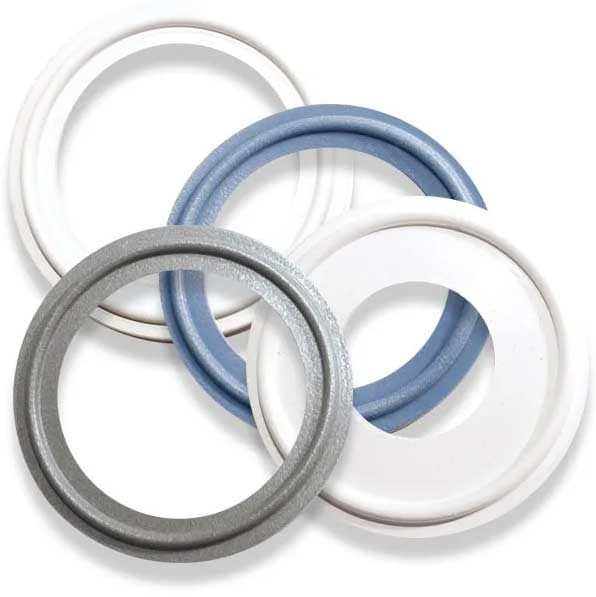
Gaskets and o-rings are cheap compared with the equipment around them, and yet a single failed seal can stop a line, spoil a batch or start a quality investigation. Choosing them well is one of the simplest ways to improve reliability, and the first step is to understand the language used to describe compliance.
What FDA compliance means
In the United States, materials that touch food must comply with the regulations of the Food and Drug Administration. For elastomers, the relevant sections of Title 21 of the Code of Federal Regulations list allowed ingredients and set limits on what can migrate into the product. Rubber materials fall under 21 CFR 177.2600, and certain fluoropolymers are covered by sections such as 177.1550. A supplier should be able to state clearly which section a compound conforms to.
What USP Class VI adds
USP Class VI is a series of biological reactivity tests published by the United States Pharmacopeia. Extracts of the material are injected into animals and the material is implanted, and the results must show no significant reaction. It is widely used in pharmaceutical and biopharmaceutical manufacturing as a signal that a material is suitable for contact with drug products, and it is often requested alongside FDA statements. Compliance belongs to a specific compound, so a change of supplier or formulation can require new documentation.
Choosing the material
- EPDM: excellent with hot water, steam and many cleaning chemicals, but poor with oils and fats
- Silicone: flexible, clean and widely used in pharmaceutical service, less resistant to steam over time and to many solvents
- FKM: good against oils and many chemicals and against heat, less flexible at low temperature
- PTFE and other fluoropolymers: very broad chemical resistance, often used as a jacket or in combination with an elastomer core
- Nitrile: economical and good with fats, but limited in temperature and in oxidizing cleaners
The correct material depends on the product, the cleaning solutions, the sterilization method and the temperature range, all together. A gasket that works with a dairy product at 70 degrees Celsius may fail if the same line is steamed every day.
Why gaskets fail
Failed seals tend to show typical symptoms. Swelling means the material is absorbing the product or the cleaning chemical. Hardening and cracking point to heat or ozone. Compression set, where the seal stays flattened and no longer springs back, comes from too much temperature, too much compression or a material that is not suited to the duty. Extrusion into a gap happens when pressure is high and the groove is badly dimensioned. Each of these is a clue for choosing a better compound or a better groove.
Fit and installation matter as much as material
Even the best compound leaks when it is installed badly. Clamps must be the right size and tightened evenly. Sanitary gaskets should sit flush with the bore, without a step that traps product. O-rings must not be twisted, stretched or cut on sharp edges when they are fitted, and they need lubrication that is approved for the product. Replacing seals on a schedule, before they fail, is much cheaper than replacing them after a leak.
Traceability and stocking
In regulated plants each part should be traceable to a batch of material. Laser engraving and private labeling make that possible without additional paperwork, and a stocking program gives you the right sizes on the shelf when a seal fails on a Saturday. A modest inventory of the most used sizes often eliminates the longest delays in a plant.
A simple documentation routine
Keep a folder, paper or digital, with the compliance statement, certificate of conformance and batch number for each seal size used in the plant. When an auditor asks how you know a gasket is suitable, the answer is one click away. Record the date each seal was installed and the cleaning method it sees. After a year of records you will know exactly how long each part lasts, and you can change parts before they fail instead of after.
Our gasket partners are described on the gaskets and o-rings page. If you have a leak that will not go away or need to document compliance for an audit, send us the details and we will help you find the right compound.